
Product Hunt Launch Guide for Founders With No Followers
 Avinash12 min read
You do not need thousands of followers to launch on Product Hunt. What you need is a product worth talking about, a well-prepared launch page, a clear positioning, and a plan for getting the right people to discover it. This guide covers what to do before launch day, how to get your first visitors, and how to measure whether the launch actually worked.
Launching on Product Hunt can feel impossible when you have no audience.
You see founders preparing launch-day posts, rallying communities, sharing launch links on social media, and getting hundreds of upvotes. If you are building your first SaaS, AI tool, app, or startup and have only a handful of followers, it is easy to assume Product Hunt is not for you.
It is.
You do not need thousands of followers to launch on Product Hunt. What you need is a product worth talking about, a well-prepared launch page, a clear positioning strategy, and a plan for getting the right people to discover and engage with your launch.
This guide explains how to launch on Product Hunt with no followers, what to do before launch day, how to generate your first visitors, and what to measure after the launch.
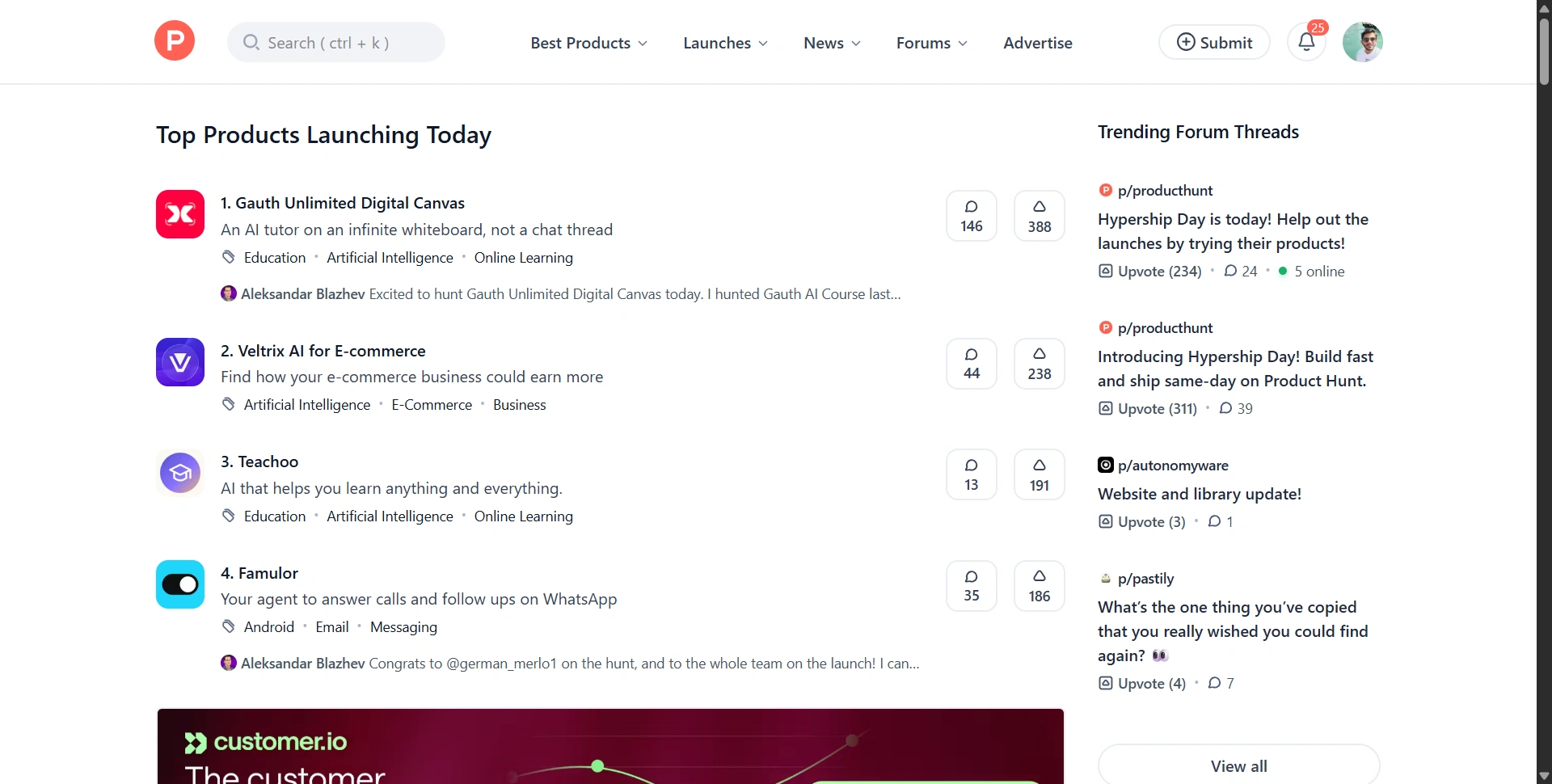
This is what you're up against on any given day: dozens of products, all competing for the same attention. You don't need to beat all of them, just reach the handful of people who actually care about yours.
Can You Launch on Product Hunt With No Followers?
Yes.
Product Hunt is a product discovery platform, not simply a social network where your existing audience determines your reach.
Having an audience can make distribution easier, but it is not a requirement for creating a launch.
The bigger challenge for a founder with no followers is not technically launching. It is generating enough relevant attention around the launch for people to discover the product, understand it, and decide to interact with it.
That means you should not build your Product Hunt strategy around:
"How do I get hundreds of people to upvote me?"
Instead, build it around:
"How do I get the right people to discover, understand, try, and discuss my product?"
That shift changes how you prepare for launch.
What Makes a Product Hunt Launch Successful?
There is no guaranteed formula for winning a Product Hunt launch.
However, several elements can make a launch more compelling:
- A clear product positioning
- A strong launch page
- A recognizable problem
- High-quality visuals
- A compelling product description
- A founder or maker story
- Early product users
- Genuine community engagement
- Distribution outside Product Hunt
- Fast responses to comments
- A product that is easy to understand
Your goal should be to create a launch that deserves attention rather than trying to manufacture attention.
This is particularly important if you have no followers.
Your lack of audience means you have less initial distribution. It does not mean your product cannot be discovered.
How to Launch on Product Hunt With No Followers
1. Make Sure Your Product Is Actually Ready
Do not launch simply because the product technically works.
Before your Product Hunt launch, someone who has never seen your product should be able to:
- Understand what it does.
- Understand who it is for.
- Understand why it is different.
- Try it without unnecessary friction.
- Understand what to do next.
If your landing page requires five minutes of explanation before someone understands the product, Product Hunt traffic will not fix the problem.
Ask three people who have never seen the product to visit your website.
Do not explain anything to them.
Watch what they do.
Can they tell you what the product does?
Can they identify the target user?
Can they explain the main benefit?
If not, fix the positioning before launching.
2. Choose a Specific Positioning
One of the biggest mistakes new founders make is trying to describe everything their product can do.
For example:
"An AI-powered platform for businesses to automate workflows, improve productivity, collaborate with teams, analyze data, and grow revenue."
This sounds like everything.
It also sounds like nothing.
A better positioning statement focuses on one specific problem:
"An AI tool that turns customer interviews into structured product insights."
The second version is easier to understand, remember, and discuss.
Your Product Hunt tagline should answer a simple question:
What is this product?
Your description should answer:
Why should I care?
Your screenshots should answer:
How does it work?
Your comments should answer:
Why did you build it?
3. Build Your Product Hunt Page Before Launch Day
Do not start writing your Product Hunt page on launch day.
Prepare everything in advance.
Your launch assets should include:
- Product name
- Tagline
- Product description
- Product logo
- Product screenshots
- Product demo
- Maker profile
- Website URL
- Pricing information
- Launch-day announcement
- Founder story
- Frequently asked questions
- Responses to likely comments
Your first impression matters because visitors may discover your product without knowing anything about you.
The page needs to sell the product, not your follower count.
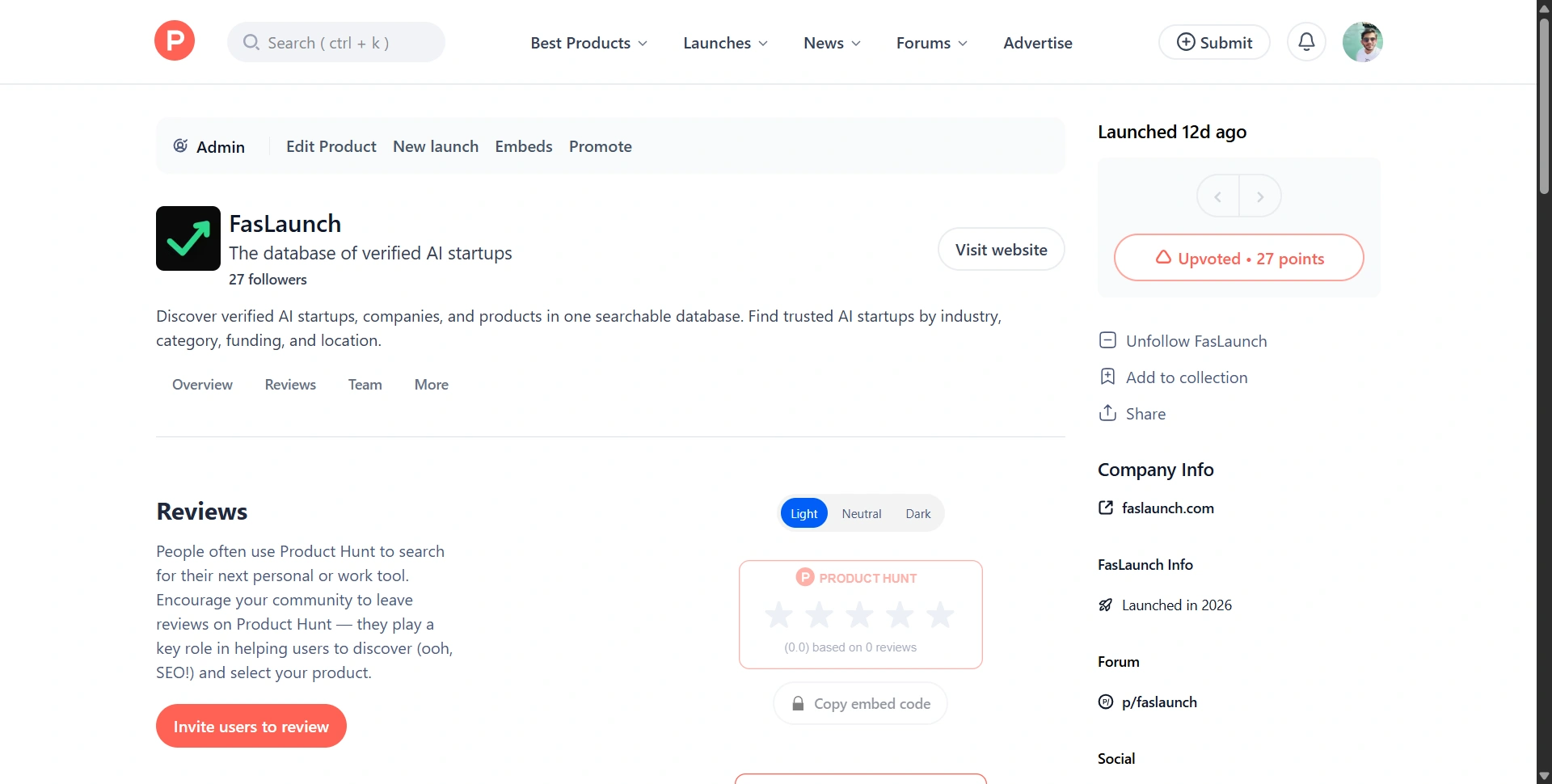
FasLaunch's own Product Hunt page: a clear tagline, a one-line description, a logo, and a Visit website button that does the selling for you. Nothing here depends on how many followers we had on day one.
4. Create a Product Demo
A product demo can communicate more than a long paragraph.
Show the product doing the thing it was built to do.
For example, if you are launching an AI writing product, show:
Input → AI processing → Output
If you are launching a developer tool, show:
Problem → Workflow → Result
Keep the demonstration focused.
Do not create a five-minute cinematic product video if the core product can be understood in 30 seconds.
Your objective is clarity.
5. Start Building a Small Launch Audience
"No followers" does not mean "no network."
You may already have:
- Existing customers
- Beta users
- Friends who are founders
- Developers
- Designers
- Former colleagues
- LinkedIn connections
- X followers
- Newsletter subscribers
- Discord members
- Slack communities
- Reddit communities
- Indie hacker communities
You do not need thousands of people.
You need people who actually care about what you are building.
Start building relationships before launch day.
Talk about the problem.
Share what you are building.
Ask for feedback.
Show product progress.
Invite beta users.
Document your journey.
Then your Product Hunt launch becomes the continuation of a story rather than a random promotional post. If you want a full day-by-day plan for this phase, see how to launch a SaaS with no audience.
6. Do Not Ask Everyone to "Upvote"
This is one of the most important lessons for founders launching without an audience.
Avoid sending generic messages such as:
"Hey, please upvote my Product Hunt launch."
Instead, give people enough context to decide whether the product is relevant to them.
For example:
"We just launched a tool that helps SaaS teams turn customer interviews into structured product insights. If you're working on product research, I'd love your feedback."
The second message creates a reason to click.
Even better, ask for feedback instead of treating people as voting machines.
People are more likely to engage when they understand what you built and why it matters.
7. Use Communities Before Launch Day
If you have no audience, communities can become an important source of early discovery.
But do not join communities one day before launch and immediately drop your Product Hunt link.
That is promotion, not community building.
Instead:
- Participate in relevant discussions.
- Answer questions.
- Share useful knowledge.
- Ask thoughtful questions.
- Give feedback to other founders.
- Build credibility.
Then, when your product is genuinely relevant to a conversation, you can mention it naturally.
The same principle applies to Reddit, Indie Hackers, Discord communities, Slack groups, and other founder communities.
Community distribution works better when you become part of the community before asking the community for attention.
8. Prepare Your Launch-Day Distribution
Product Hunt should not be your only distribution channel.
Prepare several channels before launch:
On X, create a launch post explaining:
- What you built
- Who it is for
- The problem
- Why you built it
- What makes it different
- Where people can try it
You can also share progress throughout the day.
On LinkedIn, create a founder-style launch post rather than simply copying your X post.
Talk about the problem and the journey behind the product.
By email, if you have even a small list, tell subscribers about the launch.
A small list of highly relevant people can be more valuable than a large list of people who do not care about the product.
In communities, share only where promotion is allowed and where the product genuinely fits the audience.
With your founder network, personally reach out to people who are likely to care.
Keep the message short and relevant.
9. Launch With a Story
People connect with stories more easily than feature lists.
Instead of:
"We launched an AI-powered analytics platform with 25 features."
Try:
"We kept seeing founders spend hours manually turning customer feedback into product decisions, so we built a tool that does the first pass automatically."
The story gives people context.
A useful Product Hunt launch story can explain:
Problem → Frustration → Insight → Product → Result
You do not need an extraordinary startup origin story.
It just needs to be authentic and understandable.
10. Be Active on Launch Day
Launching does not mean publishing the Product Hunt page and disappearing.
Stay available.
Monitor comments.
Answer questions.
Thank people for useful feedback.
Explain your decisions.
Share interesting product details.
Ask users what they would improve.
If someone reports a problem, respond constructively.
Your launch page should feel alive.
A founder actively participating in the discussion gives visitors a reason to participate too.
11. Make Your First Comment Useful
Your first comment is an opportunity to introduce the founder and explain the motivation behind the product.
Do not write:
"Hey everyone, please support us!"
Instead, explain:
- Who you are
- What you built
- Why you built it
- The problem you experienced
- Who the product is for
- What feedback you want
For example:
We built this after repeatedly seeing SaaS teams spend hours manually organizing customer feedback. Our goal was to make the first step of that process dramatically faster. I'd especially love feedback from product managers and early-stage founders who regularly conduct customer interviews.
That creates a conversation.
12. Get People to Try the Product
Upvotes are only one signal.
A visitor who signs up, uses the product, gives feedback, shares it with a colleague, or becomes a customer can be much more valuable than someone who simply clicks an upvote button.
Your launch should therefore have a clear next step.
For example:
Discover → Visit → Try → Sign up → Activate → Share
Make that journey as frictionless as possible.
If someone clicks from Product Hunt and lands on a confusing homepage, you lose the opportunity.
13. Use Your Product Hunt Launch as Content
Your launch should not disappear after launch day.
Turn the experience into additional content.
You can create:
- A launch recap
- What we learned from launching
- Product Hunt launch mistakes
- Our first-week results
- Customer feedback
- Product updates
- A founder story
- A case study
- A behind-the-scenes article
For example:
"What We Learned From Launching Our SaaS on Product Hunt With 0 Followers"
This can become a standalone piece of content that attracts founders researching Product Hunt months later.
Your launch becomes the source material for a larger distribution system.
What If You Get Almost No Traction?
Do not immediately conclude that Product Hunt does not work.
Diagnose the launch.
Ask:
Did people see the launch?
If traffic was extremely low, the problem may be distribution.
Did people click?
If impressions existed but clicks were weak, your positioning or presentation may need work.
Did people sign up?
If visitors arrived but nobody registered, investigate your landing page, offer, pricing, onboarding, and product-market fit.
Did people engage?
If visitors read the page but did not comment or interact, your positioning may not be generating enough curiosity.
Did anyone become a customer?
This is ultimately more meaningful for many businesses than a leaderboard position.
A Product Hunt launch is an experiment.
Treat it like one.
Is Product Hunt Worth It?
That depends on what you want from the launch.
Product Hunt can provide product discovery, feedback, social proof, backlinks, potential customers, founder connections, and additional content opportunities.
But it should not be treated as a guaranteed customer acquisition channel.
For some products, the Product Hunt audience may closely match the target market.
For others, it may be useful primarily for awareness, feedback, credibility, or launch content.
If your target customers are not active on Product Hunt, you may need other acquisition channels alongside it.
That is why Product Hunt should be one part of your distribution strategy rather than your entire marketing strategy. If you are evaluating launch platforms, see how to choose the right product launch platforms before deciding where to submit your product.
What Should You Do After Product Hunt?
The launch is not the finish line.
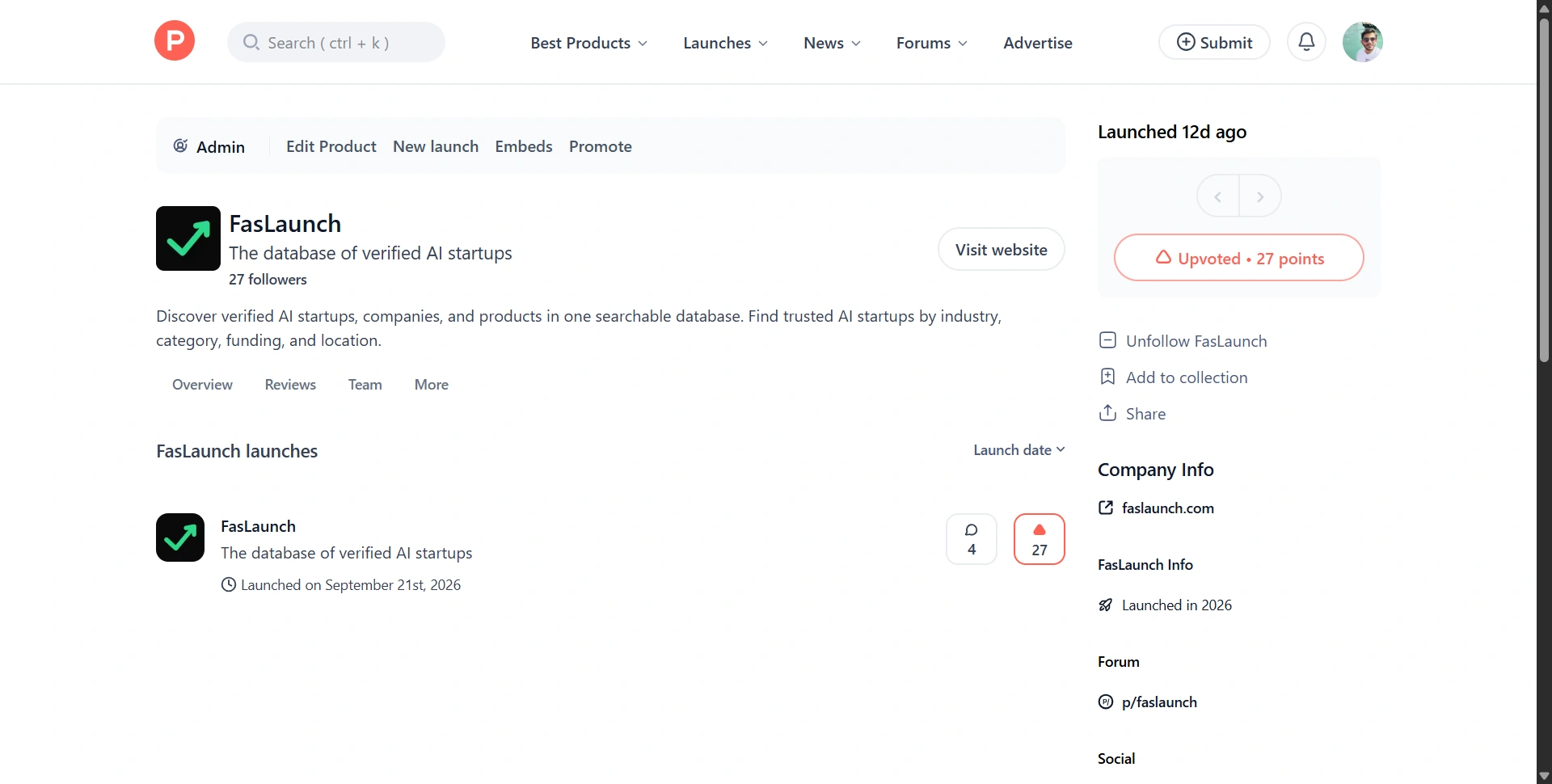
What's worth tracking after launch day: comments, upvotes, and a real date, the actual signals, not a leaderboard rank.
The most valuable work often starts afterward.
Collect:
- Visitor data
- Signup data
- Customer feedback
- Questions
- Feature requests
- Conversion data
- Referral traffic
- Sales conversations
Then identify patterns.
What did people repeatedly ask?
Which feature attracted the most attention?
Where did visitors drop off?
Which audience responded?
Which distribution channel generated qualified traffic?
Use those insights to improve the product and your next distribution campaign. FasLaunch, for example, can be used as another distribution channel for founders looking to get their product listed and discovered beyond a single launch platform.
Product Hunt Launch Checklist
Before launching, make sure you have:
- A clear product positioning
- A strong tagline
- A complete Product Hunt page
- High-quality screenshots
- A concise product demo
- A clear founder story
- A working website
- A frictionless signup flow
- Launch-day social posts
- Email or community distribution prepared
- Relevant communities identified
- People who can provide genuine feedback
- A first comment prepared
- A plan for responding to comments
- Analytics configured
- A post-launch feedback process
- Additional distribution channels identified
Final Thoughts
You do not need 10,000 followers to launch on Product Hunt.
You need a product people can understand, a clear reason for them to care, and a distribution strategy that does not depend entirely on your existing audience.
Start preparing before launch day.
Talk to potential users.
Build relationships.
Participate in communities.
Create useful launch assets.
Explain the problem clearly.
Ask for feedback instead of blindly asking for votes.
Then use launch-day data to understand what worked and what did not.
Most importantly, do not measure the entire launch by a leaderboard position.
A launch that generates five highly qualified users, two customer conversations, and one paying customer may create more long-term value than a launch that generates thousands of low-intent visitors.
Product Hunt can be a useful launch channel, but the real objective is not simply to launch.
The objective is to turn attention into users, users into customers, and the launch into a repeatable distribution system.
If you're ready to launch your product, you can also submit it to FasLaunch and get your product listed as part of your broader launch and discovery strategy. You can also explore the launch platforms directory to find additional places where you can distribute your product.
Frequently asked questions
Can you launch on Product Hunt with no followers?
+
Yes. Product Hunt is a product discovery platform, not simply a social network where your existing audience determines your reach. What matters more is a clear positioning, a complete launch page, and a plan for getting the right people, not just any people, to discover and engage with it.
What should I do before launching on Product Hunt with no audience?
+
Make sure the product is genuinely ready, choose a specific positioning instead of describing everything it does, build your launch page and demo in advance, and start building a small, relevant network through communities and direct outreach before launch day, not on it.
Should I ask people to upvote my Product Hunt launch?
+
No. Asking for upvotes treats people as voting machines. Give them enough context about the problem you solve and ask for feedback instead, that creates a reason to click and engage, not just a favor to grant.
Is Product Hunt worth it for a startup with no audience?
+
It depends on what you want from the launch. Product Hunt can bring product discovery, feedback, social proof, backlinks and founder connections, but it is not a guaranteed customer-acquisition channel. Treat it as one part of your distribution strategy, not the whole thing.